
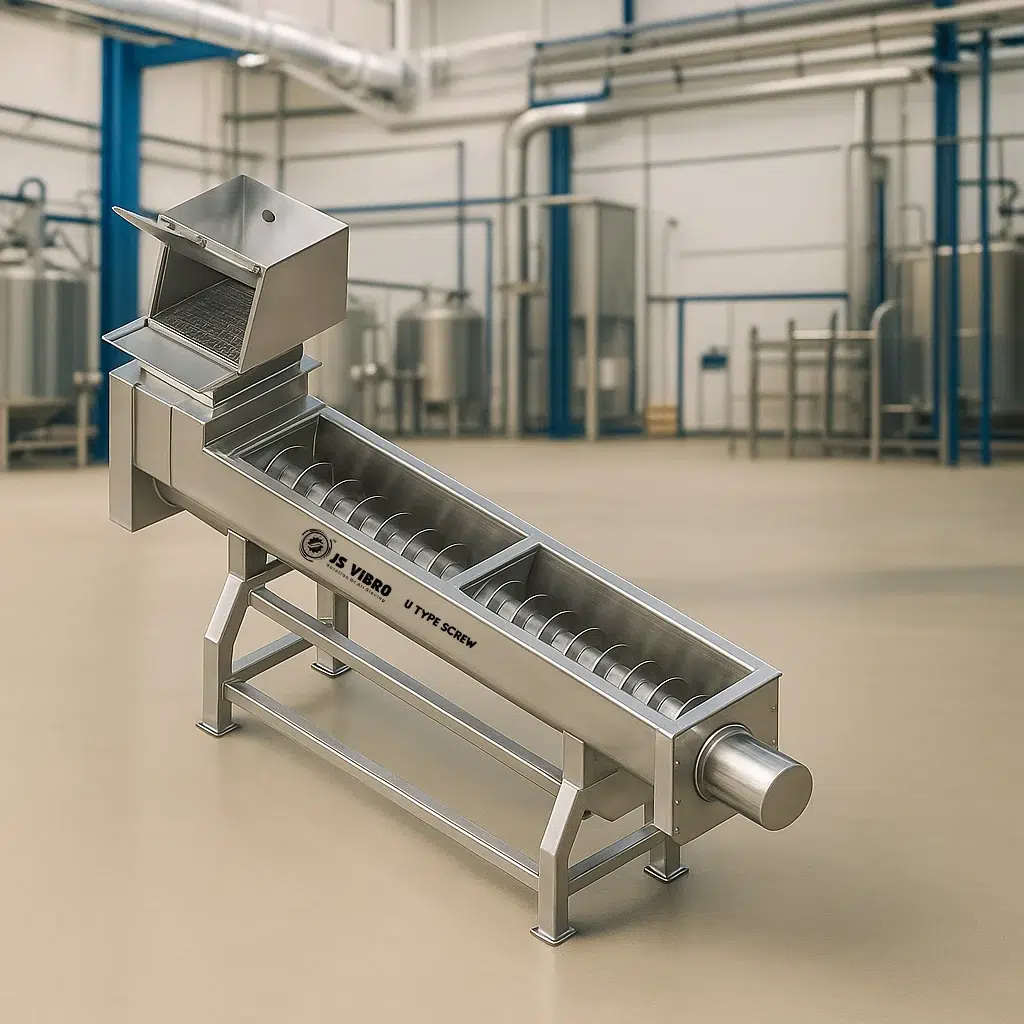
How to Choose the Right U Type Screw Conveyor for Your Plant
Selecting the right U Type Screw Conveyor is a critical decision for any processing or material-handling plant. A well-chosen conveyor ensures smooth material flow, minimal downtime, long service life, and optimized operating costs. On the other hand, a poorly selected conveyor can lead to blockages, excessive wear, frequent maintenance, and energy losses. This guide walks you through the key factors you should evaluate before choosing a U Type Screw Conveyor for your plant.
Understand Your Material Characteristics
The first and most important step is analyzing the material you want to convey. U Type Screw Conveyors are versatile, but their performance depends heavily on material properties.
Key factors to evaluate include bulk density, particle size, flowability, abrasiveness, moisture content, and temperature. Free-flowing powders behave very differently from sticky, fibrous, or abrasive materials. For example, fine cement powder requires dust-tight covers, while wet sludge may need special screw flights to prevent buildup. Accurately defining material behavior helps determine screw design, speed, and construction material.
Determine the Required Conveyor Capacity
Capacity requirements define the overall size and power of the conveyor. You should calculate the required throughput in tons per hour or cubic meters per hour, considering whether the operation is continuous or batch-based.
It is good practice to include a safety margin to accommodate peak loads and future capacity expansion. Oversizing slightly is often safer than undersizing, but excessive oversizing can increase power consumption and wear. Capacity calculations should follow recognized engineering guidelines such as those from CEMA, ensuring reliability and consistency.
Select the Right Screw Diameter and Pitch
Screw diameter and pitch directly affect material flow and conveyor efficiency. Larger diameters increase capacity, while pitch controls how aggressively material is moved forward.
Standard pitch screws are suitable for most applications, but short pitch screws may be required for inclined conveying or sticky materials. Variable pitch screws are useful when feeding material from hoppers, as they help maintain uniform loading and prevent flooding. Matching screw geometry to material behavior is essential for stable operation.
Decide on Conveyor Length and Inclination
U Type Screw Conveyors are most efficient when operating horizontally. However, many plants require inclined conveying due to layout constraints.
As inclination increases, conveyor capacity decreases and power requirements rise. Typically, inclines above 20 degrees require special consideration. You should evaluate available space, inlet and discharge locations, and structural supports when deciding conveyor length and angle. Proper layout planning prevents performance losses and installation challenges.
Choose the Right U Trough Design
The U trough is a defining feature of this conveyor type. Standard U troughs are economical and easy to maintain, while flanged troughs offer better rigidity for longer conveyors.
Depending on the application, troughs may include liners to protect against abrasion, drain ports for wet materials, or dust-tight covers to control emissions. Hinged or removable covers improve accessibility for inspection and cleaning, reducing maintenance time.
Select Suitable Construction Materials
Construction material selection impacts durability, hygiene, and corrosion resistance. Mild steel is commonly used for general industrial applications, while stainless steel is preferred for food, pharmaceutical, and chemical industries.
For corrosive environments, special alloys or protective coatings may be necessary. The screw, trough, covers, and fasteners should all be evaluated as part of the material selection process to ensure compatibility with the conveyed product and operating environment.
Drive Unit and Power Requirements
The drive unit must be capable of handling the required torque under full load conditions. Motor size and gearbox selection depend on material characteristics, conveyor length, and inclination.
Direct-drive or shaft-mounted gearboxes are commonly used in U Type Screw Conveyors. Variable Frequency Drives (VFDs) are increasingly popular because they allow speed control, energy savings, and smoother startup. Proper drive selection minimizes energy consumption and mechanical stress.
Bearing, Shaft, and Support Configuration
Bearing selection plays a major role in conveyor reliability. Short conveyors may use only end bearings, while longer conveyors require hanger bearings for additional support.
Bearing material and lubrication type should match the operating conditions. For example, self-lubricating or sealed bearings are useful in dusty or hard-to-access areas. Proper shaft alignment and support spacing reduce vibration and premature wear.
Maintenance and Safety Considerations
Ease of maintenance should never be overlooked. U Type Screw Conveyors are favored because their open trough design allows easy inspection and cleaning.
Safety features such as guards, emergency stop switches, and interlocks are essential to protect operators. Covers should be designed to prevent accidental contact with moving parts while still allowing convenient access for maintenance tasks. Compliance with plant safety standards is a must.
Customization and Special Features
Every plant has unique requirements, and customization often adds significant value. Common custom features include multiple inlets and outlets, special screw flights, wear liners, and explosion-proof designs.
Automation options such as level sensors, load monitoring, and VFD integration can further improve efficiency and process control. Discussing these options with the manufacturer early helps ensure the conveyor meets both current and future needs.
Installation and Site Conditions
Site conditions influence both design and installation. Indoor and outdoor installations have different requirements for weather protection, corrosion resistance, and structural support.
Adequate foundation strength, proper alignment, and sufficient clearance for maintenance are essential. Planning installation details in advance reduces commissioning time and prevents costly modifications later.
Evaluate Cost and Lifecycle Value
While initial purchase cost is important, it should not be the only deciding factor. A cheaper conveyor may result in higher maintenance costs, shorter lifespan, and more downtime.
Consider total lifecycle cost, including energy consumption, spare parts availability, service support, and warranty. A reliable manufacturer with strong after-sales support often delivers better long-term value.
Final Checklist Before Purchase
Before finalizing your decision, verify that all specifications match your process requirements. Review design calculations, confirm compliance with applicable standards, and request references or case studies from similar applications.
A carefully selected U Type Screw Conveyor will deliver consistent performance, reduce operational risks, and support efficient plant operation for years to come.